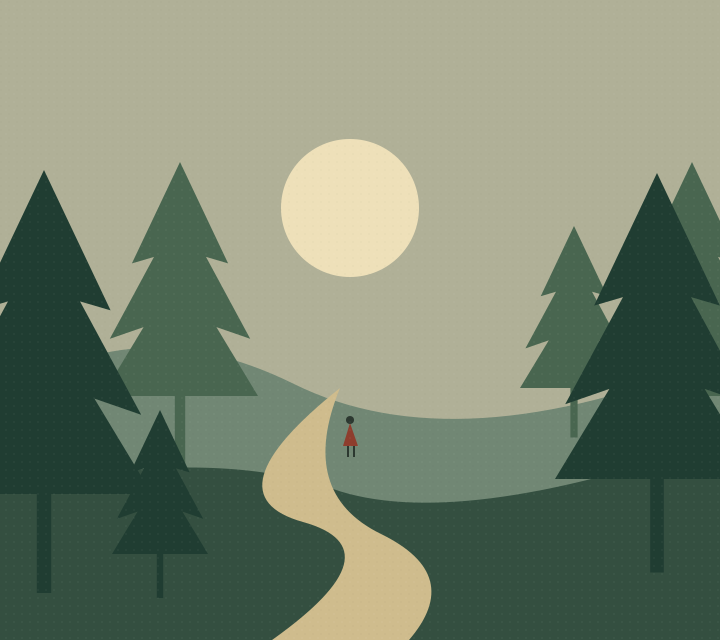
A book illustration gives you a world all at once, but your eye enters it in an order. Something catches your attention. A line carries you elsewhere. A small detail becomes visible only when you look again. Following that journey is a good way to begin looking closely.
Find the first point of attention
Cover the caption for a moment. What do you notice first? It might be the lightest shape, a face, a patch of warm colour in a cool landscape, or an interruption in a repeated pattern. Then ask what makes your eye move away from it.
This is an observation exercise, not a search for the artist’s single correct intention. Two people may enter the same picture differently. Comparing what each person noticed can reveal how much activity a seemingly simple image contains.
Look for scale
A doorway, a tree or a tiny figure can tell you how large a landscape is. Remove that familiar measure in your imagination and see how the picture changes. Does a mountain become a stone? Does a room become a city?
Leave the unseen world unseen
The edge of an illustration is also part of its storytelling. A path disappears, a figure looks outside the frame, or a building continues beyond the page. The image can suggest a larger world without supplying it in full.
Try writing one sentence about what lies just outside a picture. Then write a different sentence that would be equally consistent with what you can see. The space between those possibilities is part of fantasy’s appeal.
Find the person behind the image
Look for the artist’s credit and seek out their own discussion of the work. Our gallery archive guide gathers surviving references to ROF’s illustration coverage, including James Gurney’s account of a magazine feature.